Verystream Playmobil: The Movie 2019 Full HD Online

KissMovies Playmobil: The Movie 2019 Download Free Online

Playmobil: The Movie

Title: Playmobil: The Movie

Realese: 2019-08-07

Runtime: 99 Minutes

Genre: Family, Animation, Fantasy, Comedy, Adventure

Actor: Anya Taylor-Joy, Daniel Radcliffe, Kenan Thompson, Gabriel Bateman, Jim Gaffigan, Adam Lambert, Karen Strassman, Ben Diskin, Meghan Trainor, Kirk Thornton

Company: ON Animation Studios, Pathé!, On Entertainment, Morgen Studios

Reviews:

Budget: $75,000,000

where can i watch Action movies online

Find showtimes, watch trailers, browse photos, track your Watchlist and rate your favorite movies and TV shows on your phone or tablet!

KissMovies Happiest Season 2020 Free New HD Movie in 1080p

Putlocker Happiest Season 2020 Full HD Online

Happiest Season

Title: Happiest Season

Realese: 2020-11-20

Runtime:

Genre: Romance, Comedy

Actor: Kristen Stewart, Mackenzie Davis

Company: Temple Hill Entertainment, TriStar Pictures

Reviews:

Budget:

123movies123

Find showtimes, watch trailers, browse photos, track your Watchlist and rate your favorite movies and TV shows on your phone or tablet!

KissMovies In Fabric 2019 Free New HD Movie in 1080p

Putlocker In Fabric 2019 Full HD Online

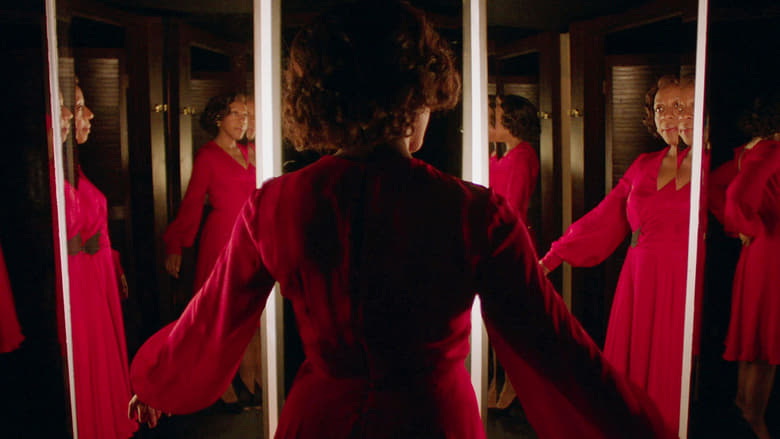
In Fabric

Title: In Fabric

Realese: 2019-06-28

Runtime: 118 Minutes

Genre: Horror, Thriller, Fantasy

Actor: Marianne Jean-Baptiste, Leo Bill, Fatma Mohamed, Gwendoline Christie, Hayley Squires, Jaygann Ayeh, Julian Barratt, Steve Oram, Richard Bremmer, Barry Adamson

Company: BBC Films, Rook Films, British Film Institute, BFI Film Fund

Reviews: I’m going to give this film half a star because I hated it that much, but here’s the thing: isn’t such a reaction worth five stars? To simply dislike a film, move on and never give it a second thought is more of an insult than a half star rating. My full-bodied hatred of ‘In Fabric’ means that a gamut of emotions was run throughout the course of viewing, and that’s all a filmmaker is really trying to do, right? Invocation, no matter the result? And for that, ‘In Fabric’ is a raging success. Five stars!
– Jess Fenton

Read Jess’ full article…
https://www.maketheswitch.com.au/article/review-in-fabric-the-best-worst-film-ever

Head to https://www.maketheswitch.com.au/sff for more Sydney Film Festival reviews.
**_Very strange, very stylish, very funny, but not for everyone_**

> _Modern man is drinking and drugging himself out of awareness, or he spends his time shopping, which is the same thing._

– Ernest Becker; _The Denial of Death_ (1973)

> _In those days a decree went out from Emperor Augustus that all the world should enjoy unprecedented savings on all their favourite brands. This was the first Black Friday and took place while Quirinius was governor of Syria. All went to their own towns to find their discounts. Joseph also went from the town of Nazareth in Galilee to Judea, to the cit__y of David called Bethlehem, because he had his eye on a new laptop. He went to be registered at Target with Mary, to whom he was engaged and who was expecting a child. While they were there, the time came for her to deliver her child. And she gave birth to her firstborn son and wrapped him in the latest styles from Old Navy, and laid him in a shopping cart, because they were waiting in line to get into Walmart._

– Adam Kotsko; “The story of the first Black Friday” (2014)

One of the most visually and aurally accomplished filmmakers currently working, writer/director Peter Strickland has thus far enjoyed considerable critical acclaim and some limited arthouse and festival success, but has been unable to make much of a mainstream impact. Not that he seems remotely bothered by this, as his latest, _In Fabric_, is easily the most impenetrable and singular work in his increasingly impressive _oeuvre_. On paper, it’s all very straightforward – an unsuspecting customer buys a dress that seems to be haunted (or may actually be inherently evil), and it unleashes chaos in her life. But as anyone who has seen any of Strickland’s previous films knows, bare plot outlines do little to convey the riches therein – sure, _Katalin Varga_ (2009) is a rape/revenge thriller, _Berberian Sound Studio_ (2012) is a giallo love-letter, and _The Duke of Burgundy_ (2014) is an S&M-themed lesbian romance, but each one goes to some truly unexpected places not in any way suggested by their ostensible subject matter. With _In Fabric_, although it definitely flirts with embracing the transformative power of fine clothing and the positive psychological effects one can experience by wearing something one believes to look fantastic, Strickland is far more interested in roundly mocking some of the more crass elements of consumerism, particularly the pernicious and seemingly irresistible lure of “the bargain”, and the herd mentality manufactured, maintained, and exploited by retail corporations during Black Friday (an event that if witnessed by aliens would surely lead to them judging us too intellectually rudimentary to bother conquering). _In Fabric_’s biggest single problem is that it’s actually made up of two loosely-connected storylines, but because the first one is so much more interesting, it leads to some narrative slackness in the second half, and all in all, it’s not a patch on his best work to date, _The Duke of Burgundy_. Nevertheless, it’s brilliantly acted, looks (and sounds) amazing, has an unparalleled commitment to the more tactile elements of the medium, is exceptionally funny, and will never allow you look at a washing machine (or a washing machine repairman) in quite the same way again.

Set in a London suburb at an unspecified point in time (although obviously meant to be during the 1980s), the film tells the story of bank teller Sheila Woolchapel (Marianne Jean-Baptiste, playing the role as if she’s in a piece of 1960s social realist cinema). A recently-divorced mother to a teenage son, Vince (Jaygann Ayeh), whose older girlfriend Gwen (an unrecognisable Gwendoline Christie having an absolute blast) seems to have moved in without asking, Sheila’s life is in a rut (the most excitement she has is watching Vince and Gwen having sex through a keyhole…don’t ask). Having recently placed a lonely-hearts ad in the paper, she has an upcoming date, and is determined to make a good first impression, and so visits a Dentley & Soper department store looking to buy something nice in the January sales. Apparently run by a coven of witches who don’t even bother trying to conceal their true identities, Sheila is all but accosted by Eastern European sales assistant Miss Luckmoore (Strickland regular Fatma Mohamed, who gleefully plays the role like she’s in a Halloween special of _The Simpsons_, and who describes the store as “_a panoply of temptation_”). Talked into buying a beautiful “_artery red_” dress, it doesn’t take long for Sheila to realise that something is not entirely kosher about the garment – from prompting dog attacks to trashing her washing machine to floating above her bed to having strange phrases sown into the lining (“_you who wear me will know me_”) to featuring prominently in particularly nasty dreams, clearly the dress is as nefarious as a Dublin-made shell suit (although it looks slightly less ridiculous), and has nothing but bad intentions for poor Sheila. And to make matters worse, the date is a bust. Meanwhile, the wedding of washing machine repairman Reg (Leo Bill) and his fiancée Babs (Hayley Squires) is fast approaching; Sheila’s micromanaging bosses, Stash and Clive (a hilarious Julian Barratt and Steve Oram, respectively), have some concerns over her method of shaking hands; Luckmoore and her boss, Lundy (Richard Bremmer), spend their free time doing something questionable to a mannequin; and a game of Ludo between Sheila, Vince, and Gwen redefines the term passive-aggressive.

Apparently inspired by Strickland’s childhood memories of being taken to the January sales by his mother, he claims that they made such an indelible impression on his psyche that to this day, he experiences autonomous sensory meridian response whenever he encounters anything related to sales. Irrespective of this, _In Fabric_ is undeniably a consumerist satire, not entirely divorced from something like George A. Romero’s _Dawn of the Dead_ (1978). The malignant control that capitalism exerts on the masses, the commodification of desire, the exploitation and manipulation of notions of self-worth, the vulgarity of a materialism serving as its own end – all are interwoven into the film’s style, sensuality, and texture, much as the themes of his first three films are indistinguishable from their aesthetic design. Just look at how Strickland uses TV commercials advertising the sales; in a film partly about the impulses that drive us to purchase, these clips are the first (and certainly not the last) indication that consumerism is effectively a form of mass hypnosis. Strickland has a real talent for making theme elevate style into something more meaningful, and _In Fabric_ provides more evidence of that, with the highly-stylised aesthetic commenting on the ultimate emptiness of retail therapy, even as it seems to offer short-term happiness. Leaning into the artificiality of the film’s _milieu_, Strickland makes no attempt to construct a believable, lived-in world, asking not only how do the customers of Dentley & Soper not realise something is wrong, but so too querying whether our own real-world behaviour is any different, when we see that item we’ve been craving turn up in a sale.

With that in mind, although this is not an especially realistic film, it is an absolutely gorgeous film, one that gleefully embraces gaudy 70s kitsch from literally its opening frames (a perfectly manicured hand violently opening a box, followed by the most 70s title sequence you’ll see all year). Reproducing the hyper-stylised look of classic giallos, the most obvious touchstone is Dario Argento’s _Suspiria_ (1977), with Strickland and his young Australian director of photography Ari Wegner (_The Kettering Incident_; _Lady Macbeth_; _Stray_) bathing the film in a lurid colour palette of over-the-top reds, purples, and greens. The other-worldly vibe is helped immensely by Cavern of Anti-Matter’s synth score full of harsh electronic screams and repetitive droning, and the queasy, disorientating sound design by Martin Pavey, executive producer Ben Wheatley’s regular sound designer. Filling the soundtrack with non-diegetic whispering and incantations, the aural design keeps the viewer constantly on edge, as if the evil in the dress has somehow infected the magnetic track. Indeed, the sound design is just as important here as it was in _Berberian Sound Studio_, a film which was literally about sound design – just listen to the sounds of the bargain-hunting crowds in Dentley & Soper, with the incoherent mumbling of their stampede into the store turned into a chaotic, animal-like din.

One of the film’s most successful elements, and one of the reasons it’s so funny, is how ultra-seriously everyone takes the whole thing. Jean-Baptiste, Bill, and Squires (the three ostensible leads) all play their parts as if they’re in a Ken Loach film (which all three have been in the past), whilst Strickland, for his part, approaches the whole endeavour with a similar reverence – there’s no winking at the audience here, and it’s the absence of such winking that makes it all so funny. From Stash and Clive explaining the correct etiquette when meeting the mistress of one’s boss to the sexual power that Reg has over women once he starts explaining the inner workings of a washing machine, the film’s humour is rooted firmly in the fact that no one involved acts like they’re in a comedy, and it’s this self-seriousness which is so disarmingly and consistently funny (just look at the Ludo game from hell or the scene where Stash and Clive discuss the difference between “_looking for staff_” and “_trying to find staff_”). The scenes of the dress crawling around Sheila’s house are especially funny partly because they look so ridiculous (you can all but see the wires leading off-camera), but mainly because Strickland treats them with complete sincerity, as if he’s not actually in on the joke (which he most certainly is). A film about an evil dress shouldn’t work on any level except parody, yet it’s precisely because the film doesn’t seem parodic that it works so well, and that’s a testament to his immense control of tone. This is particularly true of the batshit insane proclamations uttered by Luckmoore (“_the hesitation in your voice soon to be an echo in the recesses of the spheres of retail_”; “_our perspectives on the specters of mortality must not be confused by an askew index of commerce_”; “_dimensions and proportions transcend the prisms of our measurements_”; “_did the transaction validate your paradigm of consumerism?_”). This is pure verbal diarrhoea, and can only be in any way effective if it’s roundly mocked. And yet, it’s the utter dearth of mockery that renders each statement so hilarious.

In terms of problems, by the very nature of what he’s trying to accomplish, Strickland is somewhat guilty of allowing the film’s sensual elements to overwhelm the characters. Certainly, the film burrows under your skin and lodges there, and Strickland has absolute mastery of the difficult-to-control tactile components of the medium, but aside from Luckmoore, none of the characters really linger in the mind, despite the superb cast. None are especially interesting as people, and when the film focuses on them rather than the inherent strangeness at its core, it slackens quite a bit. From an emotional point of view, there isn’t a huge amount of empathy or pathos, and had Strickland focused on just the one storyline, the whole might have worked slightly better. Or perhaps he should have gone in the other direction entirely, making it a kind of ensemble piece, with five or six different storylines, watching the dress affect different people in different ways. Also in relation to this, because the Sheila plot is so much more interesting that the Reg plot, the film seems front-loaded, which is never good. And although it didn’t bother me, some people will really dislike the amount of loose ends, unexplained background elements, and narrative dead ends, especially in the bonkers last act.

Nevertheless, I really enjoyed _In Fabric_. Yet more evidence that Strickland is a master stylist (in the best sense of the term), the craft behind the film is simply beyond reproach. Feeling for all the world like a rediscovered giallo, lost for the last four decades and restored to its original glory (complete with _very_ questionable dubbing), it’s cryptic and impenetrable, but so too is it hilarious and a feast for the senses. No one makes films quite like Strickland, where the existential and esoteric rub shoulders with the tactile and the sensual, where the textures of the _milieu_ leap off the screen right alongside the themes. Hypnotic, seductive, immensely enjoyable, _In Fabric_ is quite unlike anything you’ll see all year.

Budget:

123movies123

Find showtimes, watch trailers, browse photos, track your Watchlist and rate your favorite movies and TV shows on your phone or tablet!

GoStream Rifkin’s Festival Watch Online Free

Verystream Rifkin’s Festival Full HD Online

Rifkin's Festival

Title: Rifkin’s Festival

Realese:

Runtime:

Genre: Romance, Comedy

Actor: Christoph Waltz, Gina Gershon, Louis Garrel, Elena Anaya, Sergi López, Wallace Shawn

Company: Gravier Productions, Mediapro

Reviews:

Budget:

watch Action movies online

Find showtimes, watch trailers, browse photos, track your Watchlist and rate your favorite movies and TV shows on your phone or tablet!

Putlocker Uncharted 2020 Watch Online Free

123movies Uncharted 2020 Full HD Online

Uncharted

Title: Uncharted

Realese: 2020-12-18

Runtime:

Genre: Adventure, Action

Actor: Tom Holland, Mark Wahlberg

Company: Columbia Pictures, Sony Pictures, Atlas Entertainment, Avi Arad Productions, PlayStation Productions

Reviews:

Budget:

official 123movies site

Find showtimes, watch trailers, browse photos, track your Watchlist and rate your favorite movies and TV shows on your phone or tablet!

Putlocker Richard Jewell 2019 Free New HD Movie in 1080p

123movies Richard Jewell 2019 Full HD Online

Richard Jewell

Title: Richard Jewell

Realese: 2019-12-13

Runtime: 129 Minutes

Genre: Drama

Actor: Paul Walter Hauser, Sam Rockwell, Kathy Bates, Jon Hamm, Olivia Wilde, Nina Arianda, Ian Gomez, Dylan Kussman, Mike Pniewski, Billy Slaughter

Company: Warner Bros. Pictures

Reviews:

Budget:

123movies go

Find showtimes, watch trailers, browse photos, track your Watchlist and rate your favorite movies and TV shows on your phone or tablet!

GoStream Underwater 2020 Download Free Online

KissMovies Underwater 2020 Full HD Online

Underwater

Title: Underwater

Realese: 2020-01-08

Runtime:

Genre: Action, Horror

Actor: Kristen Stewart, T.J. Miller, Vincent Cassel, John Gallagher Jr., Jessica Henwick, Mamoudou Athie, Gunner Wright

Company: Chernin Entertainment, 20th Century Fox, Walt Disney Studios

Reviews:

Budget: $80,000,000


download movies DVDRip

Find showtimes, watch trailers, browse photos, track your Watchlist and rate your favorite movies and TV shows on your phone or tablet!

GoStream The Current War 2019 Download Free Online

KissMovies The Current War 2019 Full HD Online
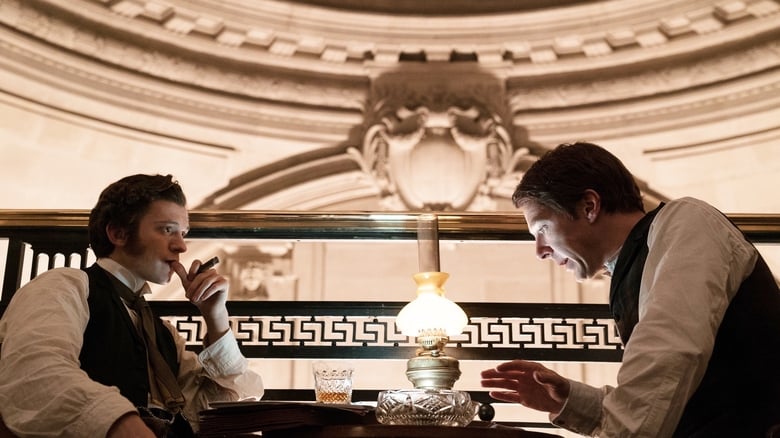

The Current War

Title: The Current War

Realese: 2019-07-26

Runtime: 105 Minutes

Genre: Drama, History

Actor: Benedict Cumberbatch, Michael Shannon, Nicholas Hoult, Katherine Waterston, Tom Holland, Matthew Macfadyen, Tuppence Middleton, Stanley Townsend, Damien Molony, Conor MacNeill

Company: Bazelevs Production, Film Rites, Fourth Floor Productions, 101 Studios

Reviews: _**Well acted and reasonably engaging, although there’s a significant disconnect between form and content**_

>_The electric-lighting company with which I am connected purchased some time ago the patents for a complete alternating system, and my protest against this action can be found upon its minute-book. Up to the present time I have succeeded in inducing them not to offer this system to the public, nor will they ever do so with my consent. My personal desire would be to prohibit entirely the use of alternating currents. They are as unnecessary as they are dangerous._

– Thomas Edison; “The Dangers of Electrical Lighting”; _North American Review_, 149:396 (November, 1889)

>_Any plan of distribution involving the meshing of the mains underneath the streets, with all house wires connected directly thereto, is regarded by the majority of competent electrical engineers as in many respects radically defective; so defective, in fact, that, unless the use of alternating currents can be prohibited, it seems destined to be wholly supplanted by the more scientific and in all respects (so far as concerns the users or occupants of buildings) far safer inductive system. Apparently sensible of this, Mr. Edison does not hesitate to say: “My personal desire would be to prohibit entirely the use of alternating currents.”_

– George Westinghouse; “A Reply to Mr. Edison”; _North American Review_, 149:397 (December, 1889)

>_If Edison had a needle to find in a haystack, he would proceed at once with the diligence of the bee to examine straw after straw until he found the object of his search. I was a sorry witness of such doings, knowing that a little theory and calculation would have saved him ninety per cent of his labour._

– Nikola Tesla; _The New York Times_ (October 19, 1931)

Filmed between December 2016 and March 2017, when _The Current War_ debuted in a near-completed form at TIFF in September 2017, it was considered a major contender for the 2018 Academy Awards. Scheduled for a prime awards-season release on December 22 (shortly thereafter changed to November 24), and with a number of heavyweight producers (Timur Bekmambetov, Basil Iwanyk, Harvey Weinstein) and executive producers (Martin Scorsese, Bob Weinstein, Steven Zaillian), the film was to be distributed by The Weinstein Company, with Harvey in particular known for his ruthlessly efficient Oscar campaigns. He was overseeing the assemblage of the final cut in October when he was accused of sexual assault and rape by numerous women, and when he abandoned the project, the November release was shelved. Little more was heard of the film until October 2018, when Lantern Entertainment (which had acquired The Weinstein Company’s assets) and 13 Films brokered a deal to co-distribute the film internationally in July 2019. Then, in April of this year, 101 Studios announced they would handle a limited release in North America in October, whilst director Alfonso Gomez-Rejon (_Me and Earl and the Dying Girl_) revealed he had re-edited the film, adding five additional scenes but trimming the overall run time by 10 minutes.

So is it worth the wait? Well, it’s competently acted, reasonably entertaining, and moderately informative, but…it definitely won’t be involved in the 2020 Oscars. It’s certainly not as bad as a lot of critics (most of them reviewing the TIFF cut) have made out, but there’s no denying that Gomez-Rejon over-directs the whole thing. If you listen to Paul Haggis’s commentary track on _Crash_ (2004), he tells a story about a scene which was filmed to begin with an elaborate camera move via a crane transitioning into a dolly shot. In the final film, however, all of that is gone, and Haggis explains that he realised during the edit that the camera moves were unjustified, doing little but drawing attention to themselves. A _lot_ of _The Current War_’s aesthetic draws attention to itself, primarily because Gomez-Rejon’s elaborate direction is so out of sync with Michael Mitnick’s by-the-numbers script – like a screenplay intended for Michael Bay ended up being directed by Michael Mann. Although make no mistake, Gomez-Rejon is no Mann.

Telling the story of the “war of the currents”, the film opens in New Jersey in 1880 as the pioneer of the long-lasting electric light bulb, Thomas Edison (Benedict Cumberbatch proving once and for all that he can’t do an American accent), stages a typically grandiose demonstration of the power of large-scale low-voltage direct current (DC). When Edison next illuminates five square blocks of Manhattan, George Westinghouse (an uncharacteristically non-psychotic Michael Shannon), best known as the inventor of the railway air brake, begins to consider that the way of the future is not in gas, as he previously believed, but in electricity. However, he sees flaws in DC, and so favours high-voltage alternating current (AC), using transformers to step down the voltage. Edison’s is the safer of the two systems, but so too is it more expensive, with a limited range compared to AC. To highlight this very point, Westinghouse illuminates Great Barrington, Massachusetts from over a mile away. He invites Edison to discuss a partnership, but Edison, who believes Westinghouse has stolen his ideas, snubs him, and the rest of the film takes place over the next 13 years as the two men come into direct conflict with one another in the “race to light America”. As Edison begins to lose ground to Westinghouse, he takes the decision to grossly overstate the danger of AC, whilst also surreptitiously attempting to convince the city of New York to use AC in its proposed first “electric chair” execution, thus tainting Westinghouse’s brand. The rivalry culminates in 1893 as each attempt to secure the contract for the World’s Columbian Exposition (aka the Chicago World’s Fair). Along the way we meet such people as Serbian-American inventor Nikola Tesla (an underused Nicholas Hoult); Edison’s loyal to a fault assistant Samuel Insull (Tom Holland); Westinghouse’s chief electrical engineer Franklin Pope (Stanley Townsend); Edison’s wife Mary (Tuppence Middleton); Westinghouse’s wife Marguerite (Katherine Waterston); Edison’s main financial backer J.P Morgan (Matthew Macfadyen); and the first man to be executed via electrocution, William Kemmler (Conor MacNeill).

Originally conceived as a stage musical by Mitnick, thematically, a great deal of _The Current War_’s concerns remain unstated; yes, it’s obviously about the war of the currents, but there’s more to it than that. Edison and Westinghouse are presented as opposite examples of the nature of success in an American free-market prospering during a period of immense technological innovation. Whilst Edison is driven by legacy and fame, Westinghouse simply wishes to improve people’s lives and is unconcerned with celebrity. Important here is Tesla, who is essentially a foil for the two leads, as the film details his inability to remain under Edison’s employment, stating his desire to “detach power from profit”, a concept utterly alien to Edison, for whom power _is_ profit.

Edison is depicted as aware of and addicted to his celebrity, a visionary enamoured of his own genius, convinced that he and he alone has the mental capacity to achieve success. He’s also portrayed as a poor husband and father, and a lousy boss, who demands that his employees’ dedication match his own. On the other hand, the more stable, less flamboyant Westinghouse is devoted to his wife, values his collaborators, has no interest in fame, and doesn’t even see Edison as competition, believing that they should be working together. Indeed, the film goes so far as to suggest that Edison knew Westinghouse’s system was the superior of the two but stubbornly refused to yield, ultimately employing baseless fear as a weapon.

The most immediately notable aspect of _The Current War_, however, is its aesthetic, specifically Gomez-Rejon’s direction and the photography by Chung Chung-hoon (_Oldeuboi_; _Ahgassi_; _It: Chapter One_). Watching the film, I was reminded somewhat of Adrian Martin’s 1992 article, “_Mise-en-scène_ is dead, or the expressive, the excessive, the technical and the stylish”, in which he divides _mise-en-scène_ into three broad categories: classical (“_in which there is a definite stylistic restraint at work_”), expressive (“_general strategies of colour coding, camera viewpoint, sound design and so on enhance or reinforce the general “feel” or meaning of the subject matter_”), and mannerist (“_performs out of its own trajectories, no longer working unobtrusively at the behest of the fiction_”). Whilst I would posit that _The Current War_ lands somewhere between the expressive and mannerist styles, it definitely lies closer to the “all style, no substance” paradigm of mannerist _mise-en-scène_, rather than the synergy between form and content found in the work of most expressive filmmakers (one of Martin’s examples of which is the aforementioned Michael Mann).

Some of Gomez-Rejon’s aesthetic choices are definitely justified, arising directly from the content and serving a clear thematic purpose, but a lot of the aesthetic design is in service of nothing but itself. An early example of a justified decision is when the camera pans up from Edison’s New Jersey demonstration and quickly travels to Westinghouse’s Pittsburgh home in what is made to appear a single shot (the unconvincing CGI is beside the point). The effect is to connect the two men, not just in terms of geography, but, more importantly, ideology. Another shot in this scene, shooting directly down on Edison’s elaborate circular light demonstration, also works well, serving to instantly show us his ambition and theatricality, plus the effectiveness of the demonstration itself. Once we reach Pittsburgh, a lengthy single-take shot introduces us to Westinghouse as he weaves his way through a throng of guests at a ball, with virtually everyone trying to catch his attention. This immediately establishes him as a man of influence and considerable reach, but one who abhors the spotlight. In a later scene, Gomez-Rejon shoots Edison and his family in a train carriage, but using a very wide fisheye lens. With Edison on one seat and his wife and two children facing him, the wide lens distorts the space between them unnaturally, mirroring the important theme of Edison neglecting and moving away from his family in pursuit of his goals.

On the other hand, some of the choices are extremely hard to rationalise. That this should be important is attested by Thomas Elsaesser and Warren Buckland in their 2002 book, _Studying Contemporary American Film: A Guide to Movie Analysis_. During their analysis of Martin’s tryptic division, they say of the mannerist style, “_style is autonomous, for it is not linked to function, but draws attention to itself. In other words, style is not motivated or justified by the subject matter, but is its own justification_”. This is an apt a description of large portions of _The Current War_ as you’re going to find. For example, there are more Dutch angles than I’ve seen in a film since Oliver Stone’s _Natural Born Killers_ (1994), but unlike Stone’s usage, when and how Gomez-Rejon deploys them is more often than not arbitrary. He also uses split-screen on occasion, and at one point, he even splits the screen into three. Again though, the reason why he employs such a technique is unclear (compare it with something like Darren Aronofsky’s _Requiem for a Dream_ (2000), where every use of split-screen is wholly justified by the narrative). This ripped me out of the film, as I constantly found myself asking, “_I wonder why he did that_”, rather than paying attention to the content. Ironically enough, whilst the idea was obviously to cover up for the script’s inadequacies via aggressive aesthetic energy, the fact that so few of Gomez-Rejon’s techniques are justified actually draws our attention to that script, as no amount of directorial gymnastics can cover the structural and pacing problems.

The handling of the characters is also problematic. Cumberbatch, for example, plays Edison as virtually identical to his portrait of Alan Turing in Morten Tyldum’s _The Imitation Game_ (2014); a brilliant, driven, uncompromising innovator who’s as difficult to relate to in terms of humanity as he is easy to admire for mental acumen. Elsewhere, the film has a habit of downplaying the supporting characters. For example, neither Mary Edison nor Marguerite Westinghouse are developed beyond “supportive wife”, whilst Insull gets just one decent scene, which comes so late as to be fairly meaningless. The worst example of this is, however, is the depiction of Tesla, who is very much an afterthought, so under-developed that one wonders if it would have been better to leave him out altogether. This tendency is also found in a postscript which credits Edison, and Edison alone, with the development of the Kinetoscope (one of the first motion picture cameras), without so much as a mention of Louis Le Prince or William Kennedy Dickson.

Nevertheless, as serious as these problems are, I rather enjoyed _The Current War_. Granted, that may be because I’ve always been drawn more to expressive _mise-en-scène_, preferring _auteur_s who aren’t afraid to employ an aesthetic signature, as opposed to those who are happy to disappear behind the work, _á la_ someone like Steven Spielberg, Ridley Scott, or Ron Howard. It was never going to be the kind of Oscar contender that was obviously intended, but the behind-the-scenes turmoil and the critical mauling are not necessarily indicative of an inherently bad film. Sure, the script is very weak in places, and Gomez-Rejon employs every camera trick known to man, more often than not without knowing why. But for all that, it kept me interested, and although I’d never argue it’s an especially well-realised historical drama, I did, for the most part, enjoy it.

Budget:


download movies DVDRip

Find showtimes, watch trailers, browse photos, track your Watchlist and rate your favorite movies and TV shows on your phone or tablet!


GoStream Dolittle 2020 Free New HD Movie in 1080p

Putlocker Dolittle 2020 Full HD Online

Dolittle

Title: Dolittle

Realese: 2020-01-09

Runtime:

Genre: Family, Comedy, Fantasy

Actor: Robert Downey Jr., Tom Holland, Octavia Spencer, Emma Thompson, Antonio Banderas, Jim Broadbent, Selena Gomez, Ralph Fiennes, Rami Malek, Craig Robinson

Company: Universal Pictures, Team Downey, Perfect World Pictures

Reviews:

Budget: $175,000,000

where to watch Action movies online

Find showtimes, watch trailers, browse photos, track your Watchlist and rate your favorite movies and TV shows on your phone or tablet!

Design a site like this with WordPress.com
Get started